CERA CYNC
Cera Cync is a student-focused ceramics brand built around the idea that great work shouldn't be lost to bad conditions. The brand is designed for high school and college students who are serious about their craft, but also balance studio time with busy, unpredictable schedules. The hero product is the Smart Ceramics Storage Case, a climate-controlled case that regulates internal temperature, humidity, and airflow to keep ceramic pieces drying safely between sessions. Paired with a free companion app, users can monitor and adjust conditions in real time, track pieces through every stage, set custom drying presets, run multiple timers, and much more. Together, the case and app form a seamless ecosystem that removes the guesswork from drying and storing ceramic work, giving students the confidence to focus on making rather than monitoring.
Categories
Branding Identity | UX/UI Design | Package Design
Tools
Adobe Illustrator | Adobe Photoshop | Figma | Vizcom
Skills
Research Methods | Illustration | System Design

Case package and app in ceramics studio


Case in environment + in use


Case Package Mockup (left) + unfolded (right)
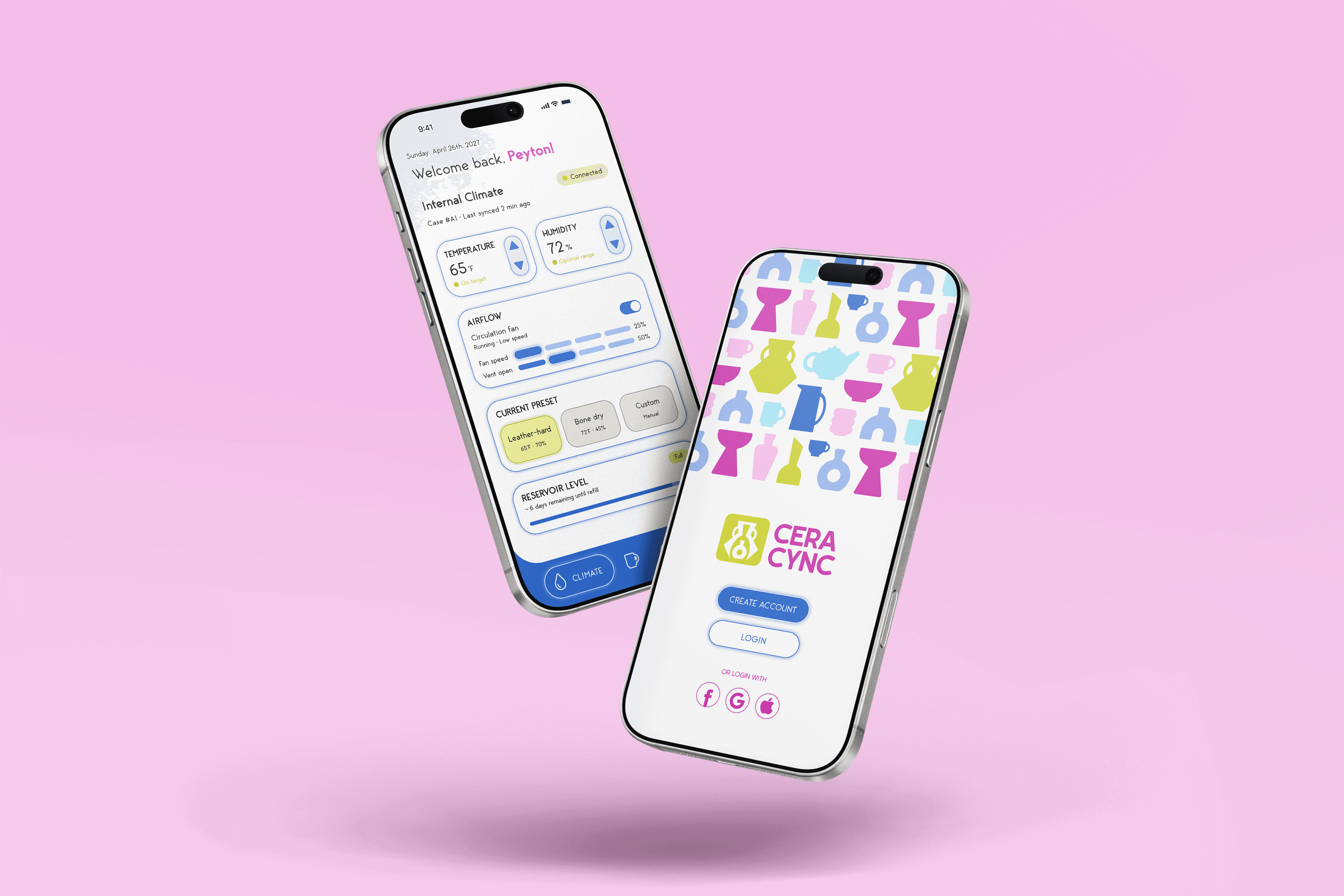

Companion App screens
✦
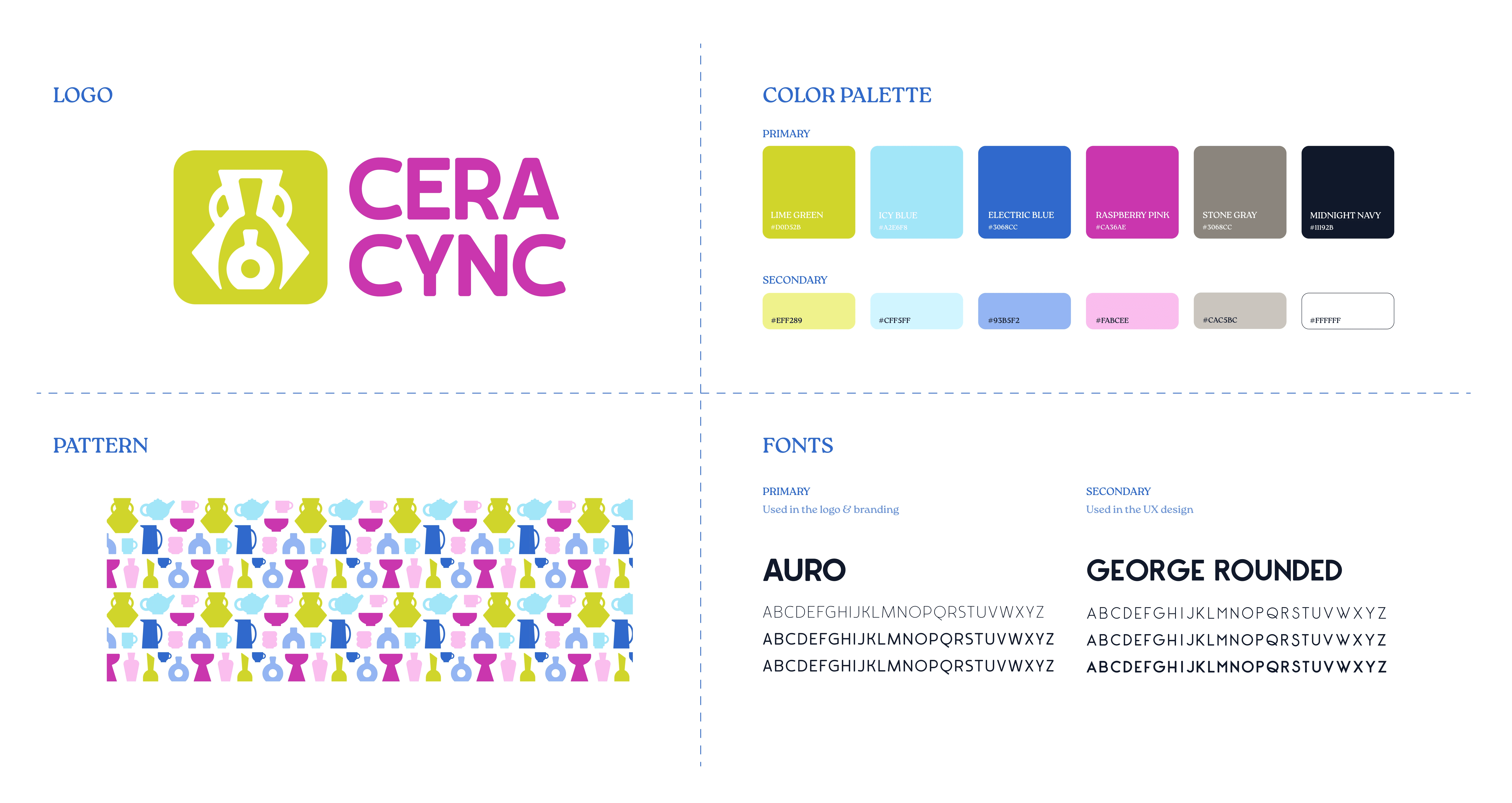
BRANDING + SKETCHES

✦
RESEARCH + PROCESS
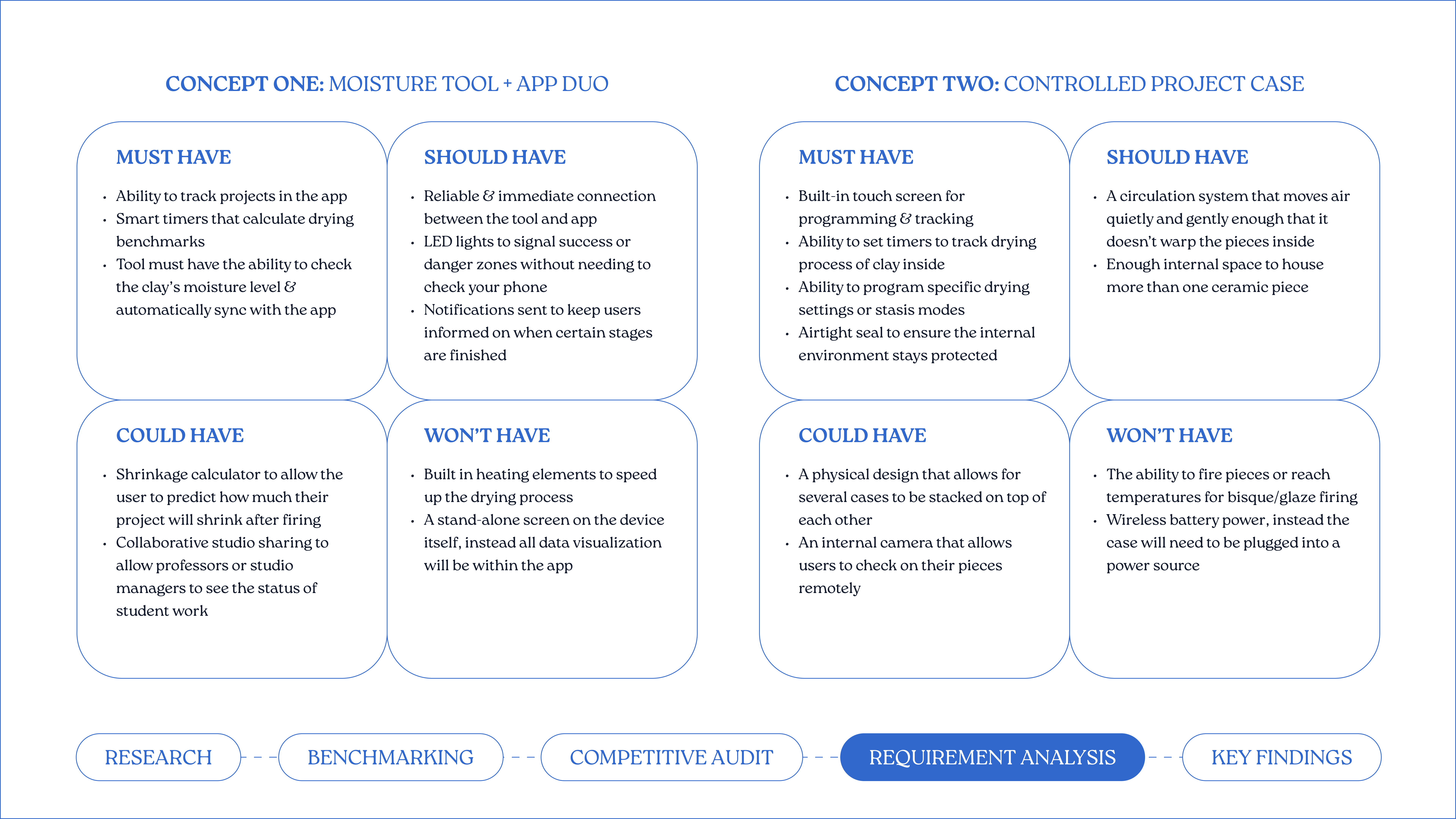
Cera Cync didn't start as one idea; it started as two. For this project, I had to rethink the form & function of a time-measuring device. I began exploring what that meant in the context of ceramics, where timing is everything. My first concept was a handheld moisture-detecting tool paired with an app that would tell you exactly when a piece was ready to move to the next stage. My second concept was a smart storage case that automatically controlled the drying environment, but without an app component. Neither felt complete on its own, so I eventually merged the two — the case handling the environment, and the app handling the intelligence behind it.
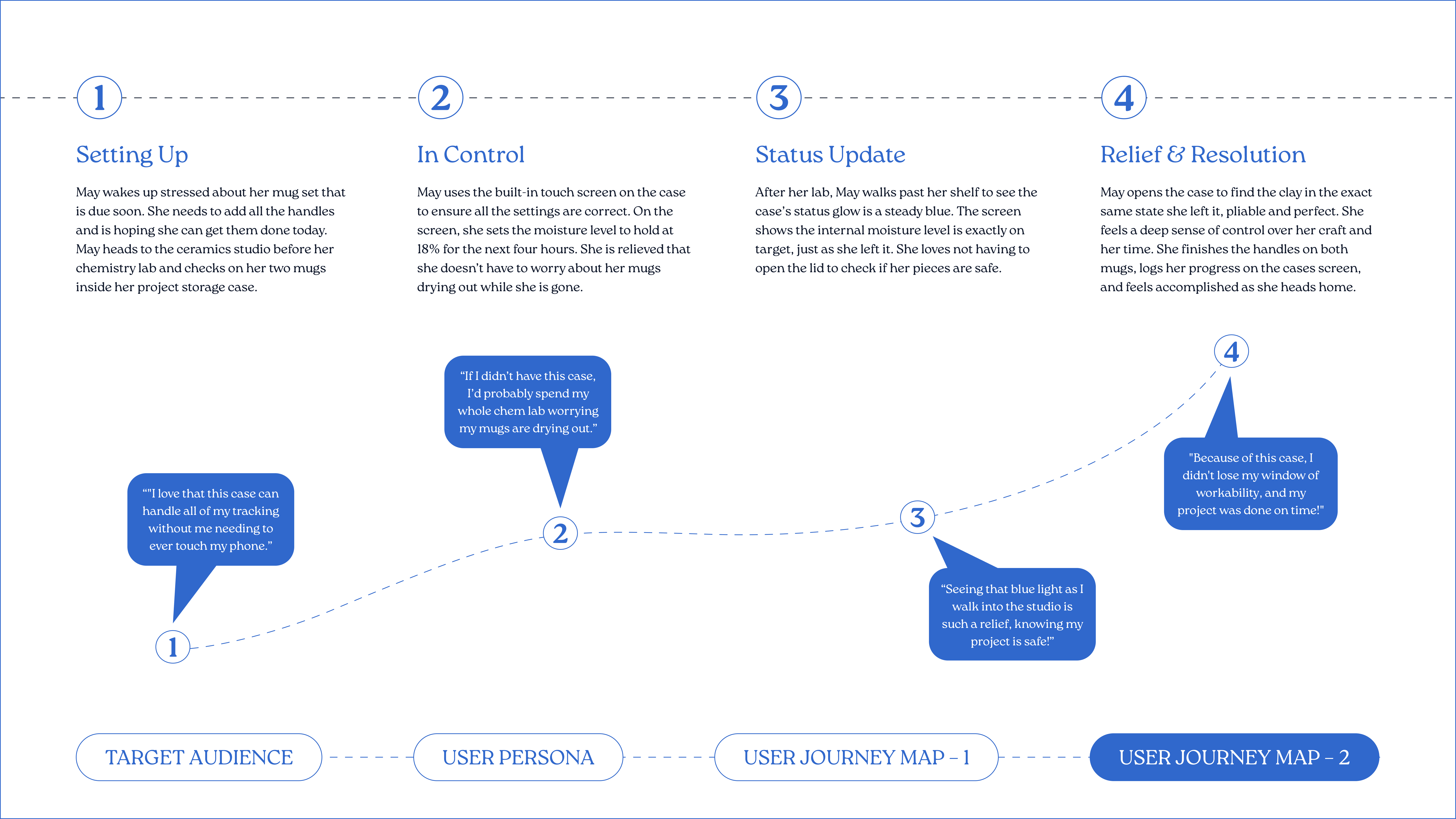
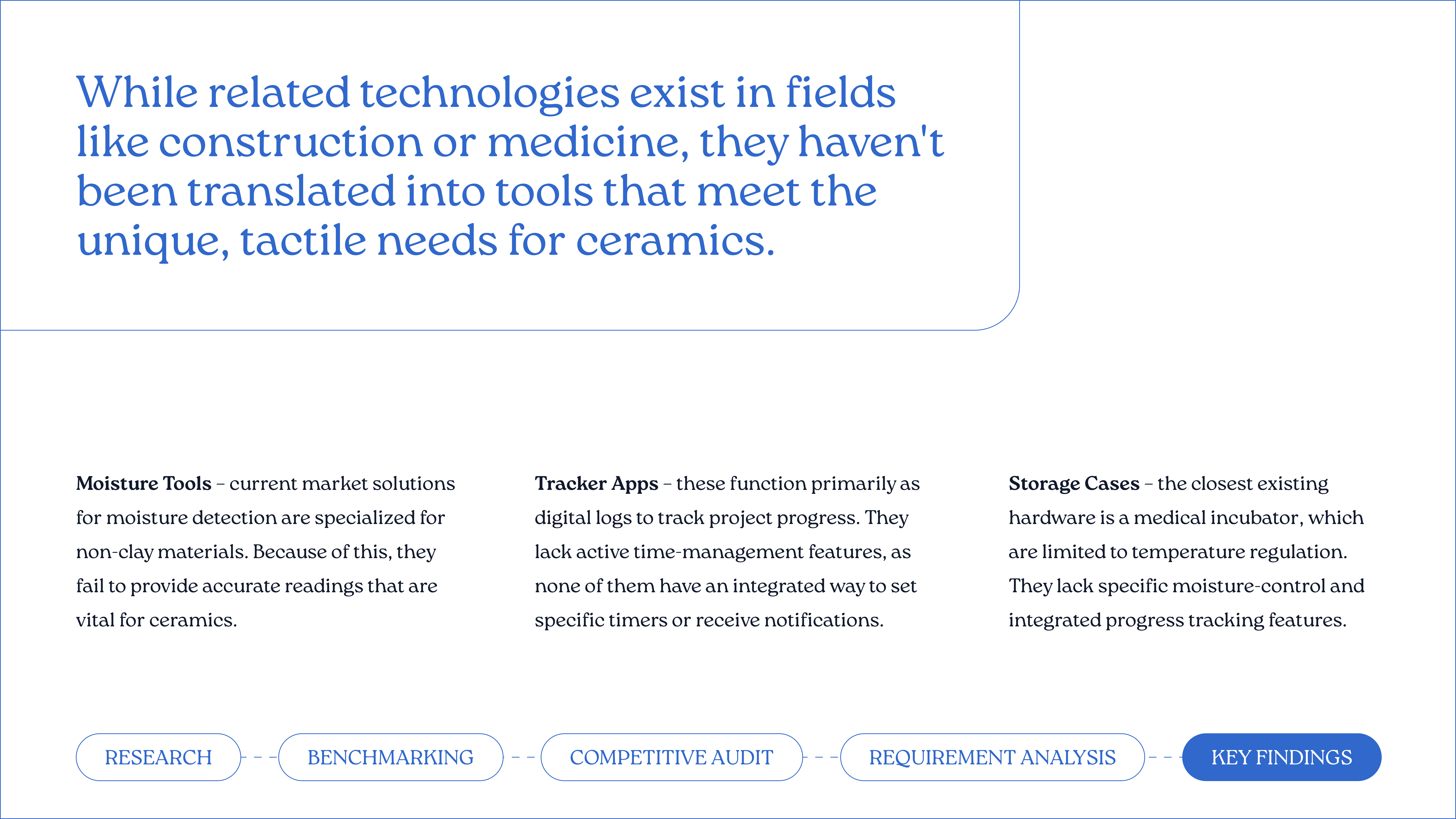
To get there, I leaned on a pretty thorough research phase. I built a user persona to pin down exactly who I was designing for, a student ceramicist trying to manage their work around a packed schedule, and a user journey map to trace all the points where things go wrong in the drying and storing process. I completed benchmarking to look at other similar products/apps on the market, and a competitive audit to identify what was already out there and where the gaps were. A requirements analysis then helped me translate all of that into concrete design decisions, what the case needed to do, what the app needed to show, and where the two needed to talk to each other. That foundation is what kept the final concept grounded in a real problem rather than just a cool idea.